
AI ad creative production in 2026 has moved from “nice to have” to the single highest-leverage skill a performance marketer can build. In the accounts I have managed at ₹1 CR+ tracked ad spend, the brands that scaled past their CPM ceiling were not the ones with bigger budgets – they were the ones that figured out how to ship 10 to 15 fresh creative variants every week without breaking the production budget or the brand guidelines.
Most marketers approach AI creative tools as a faster photoshop. That mental model is wrong, and it is why their creative output looks like everyone else’s. The right mental model is to treat AI as a creative production line where you own the brief, the brand voice, and the quality control – and AI owns the execution speed.
This is the exact AI ad creative production workflow I run for ELLE Jewelry India D2C campaigns and Pinkcity Jewelhouse’s international B2B LinkedIn Ads. It is not theory. It is what is currently running in live ad accounts.
📋 Key Takeaways
- Creative beats targeting in 2026. Algorithms now handle 90%+ of the targeting decision — your creative is what selects the audience.
- The 30% refresh rule survives only with AI. Producing 30% new creative every 2 weeks at ₹5L+ spend is impossible with traditional design — AI cuts production time by 60-70%.
- Brief is the product. Bad prompts produce bad creatives. A structured 7-field brief beats unlimited creative iteration.
- Use 3 tools, not 30. ChatGPT for copy, Midjourney for hero visuals, Photoroom for product shots. Skip everything else until these are mastered.
- 1 winner = 10 variants. The variant multiplication method extracts maximum life from every proven hook before fatigue kicks in.
- Human QC is non-negotiable. AI gets brand voice, hands, text overlays, and cultural nuance wrong — every output passes through a 5-point human check before going live.

Why AI Ad Creative Production Is Now the Biggest Lever in Paid Media
Until 2022, performance marketing was an audience targeting game. You won by finding the exact interest stack, the right lookalike percentage, the perfect placement mix. iOS 14, Meta’s algorithm consolidation and Google’s Performance Max rollout collectively killed that game. Today broad targeting plus Advantage+ does most of the work, and Meta’s own Advantage+ messaging treats creative as the main lever an advertiser still controls.
This shift means one thing for anyone scaling paid media: your creative is your targeting. The image that stops the scroll, the headline that earns the click, the video hook that holds attention for 3 seconds — these decide whether you scale profitably or stall at ₹3 lakh monthly spend. McKinsey’s work on generative AI in consumer marketing points the same way: the biggest gains sit in content production speed, not in cleverer targeting.
The AI-Human Hybrid Model: Split Responsibilities for Profitability
Handing total creative authority over to an automated model is an expensive mistake. Artificial systems lack real human empathy, cannot calculate complex market economics, and have no inherent concept of long-term brand equity. High-converting operations deploy a strict split framework:
- Machine Execution Assets: Generating multi-angle background variations, running rapid copy translations, removing visual clutter, and outputting clean responsive dimensions (1:1, 9:16, 4:5).
- Human Strategic Direction: Defining the underlying psychological angle, verifying brand tone consistency, mapping messaging variants, and running regulatory compliance reviews.
Case Study: Demi-Fine Jewellery D2C Launch (anonymised)
During the initial digital asset launch execution for a demi-fine jewellery D2C brand launching in India, building a traditional photography and graphic layout timeline would have limited launch-week assets to 10 unique creatives over 5 business days, accumulating a high production overhead. By running the hybrid pipeline outlined below, we successfully generated 47 production-ready ad assets in under 96 hours. This comprehensive creative selection gave the ad account algorithm sufficient data signals to find profitable early tracking segments without encountering immediate creative burnout.
Step 1: The Creative Brief Framework for AI Ad Creative Production
High-performing generative assets require comprehensive, technical briefs. Giving a system vague instructions will only yield generic marketing text. Your prompt structure must clearly outline target user demographics, emotional hooks, and communication constraints. Use this exact structure to prompt your copywriting tools:
Act as an elite direct-response conversion copywriter. Analyze these brand parameters to generate an ad copy framework:
- Core Product Entity: Premium Demi-Fine Gold Jewelry Collections.
- Audience Demographic: Professional urban women aged 25-45.
- Core User Frustration: Premium jewelry item tarnishing issues and lack of long-term metal durability.
- Brand Promise: 18k gold vermeil material integrity with lifetime quality warranties.
- Rules: Avoid passive sentences, generic industry adjectives, and buzzwords. Keep copy blocks scannable.

Provide 5 high-converting copy hooks optimized for social feeds.
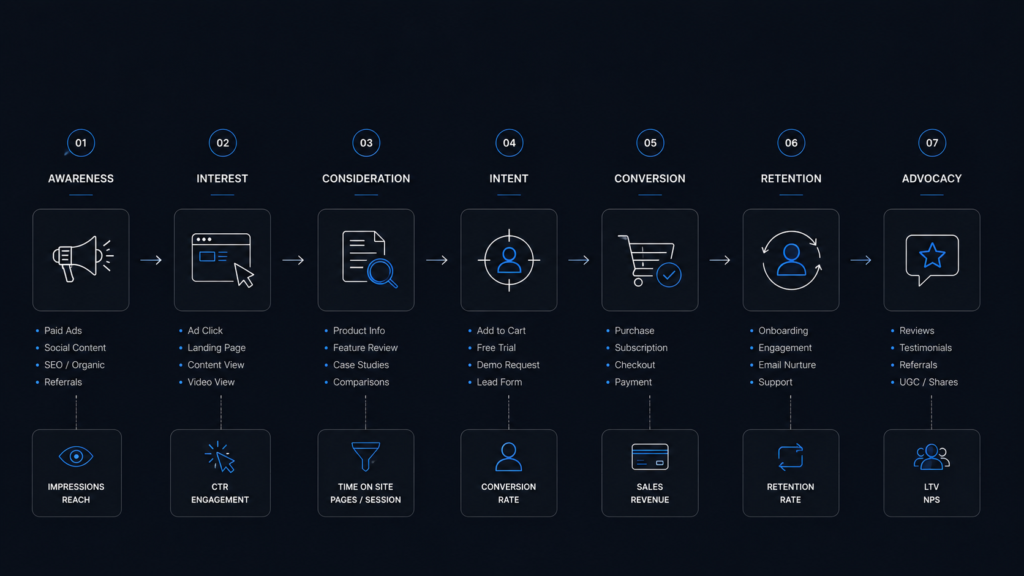
Step 2: Generating Copy Hooks That Stop the Scroll
The first line of your social feed text dictates your entire performance retention metric. When generating direct-response assets, build an iterative sequence of text blocks that test distinct psychological angles: direct problem identification, statistics-led facts, and verified trust quotes.
Always maintain an absolute scannable layout. For long-form text variants, ensure each paragraph remains brief to preserve mobile legibility. This focus matching path directly ensures that users who engage with your text transition smoothly when clicking through to your optimized landing page frameworks.
Step 3: Generating Visual Concepts (Studio Prompt Blueprint)
Ad image visuals must maintain clean lighting ratios, sharp object definitions, and clear negative space for text overlays. To achieve commercial-grade rendering in engines like Midjourney, use descriptive lighting, lens data, and style parameters. Copy this exact prompt structure for your core visual generation steps:
editorial product photograph of minimalist gold earring on warm beige textured background, shot from 30 degree angle, soft directional morning light from left, high-end fashion magazine aesthetic in the style of Vogue accessories editorial, shallow depth of field, premium luxury feel, --ar 4:5 --v 6.1 --style raw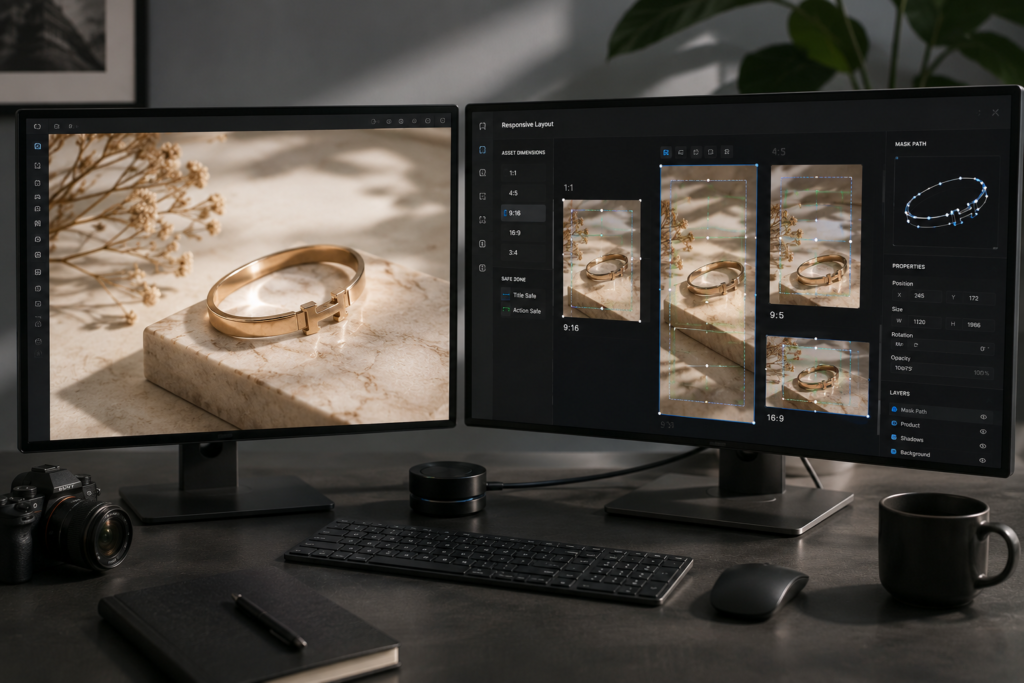
Step 4: Variant Multiplication in AI Ad Creative Production
When an individual creative asset validates its performance inside your testing structures, do not leave it unmanaged until it drops in efficiency. Instantly build 10 structural variations to extend its lifespan. Modify only one variable per variant:
- Retain the winning graphic image but change the text hook line.
- Retain the copy line but run alternate background contrast levels.
- Re-arrange the single layout into a clean multi-product split grid frame.
- Introduce a prominent customer testimonial overlay near the primary action target.
This systematic iteration strategy expands your active scaling campaigns without requiring you to reinvent core visual assets every week. For the underlying mathematical principles governing creative refresh distribution cycles, review my detailed guide on the Meta Ads scaling playbook.
Step 5: Quality Control – What AI Gets Wrong
When maintaining a continuous pipeline, human quality control is the absolute baseline of sustainable ai ad creative production. Unchecked generative outputs will damage your brand equity. Machine systems regularly introduce rendering bugs, incorrect text overlays, and inconsistent colors. Pass every single image layer through a strict 5-point quality control loop:
- Anatomical Check: Closely inspect human finger distributions and joints to ensure natural positions.
- Typography Separation: Avoid native text rendering; compile clean graphics first, then add vector typography manually using Photoroom or Canva.
- Hex Color Locking: Force compliance with your explicit brand palette across all variant layers.
- Demographic Realism: Ensure lifestyle setups, clothing choices, and environmental styles natively match your target local region.
- Policy Compliance: Audit visuals to ensure zero violations of platform safety guidelines.
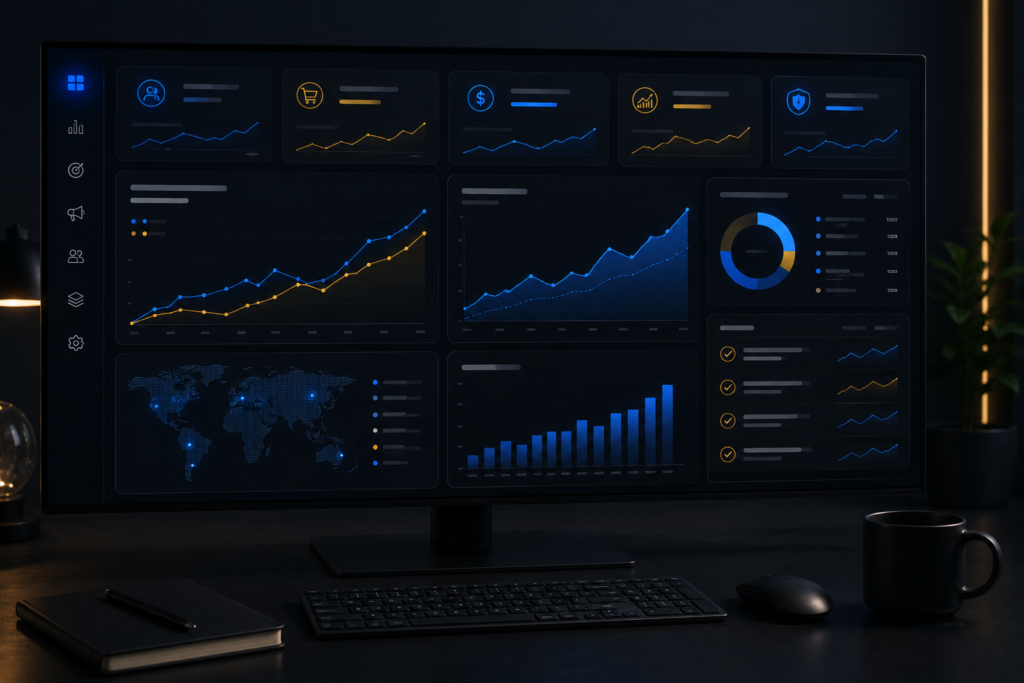
Building a Creative Production Line at Scale
Structuring a systematic schedule turns your raw assets into a automated engine for high-converting ai ad creative production. To scale budgets smoothly, you must transform asset development into a structured weekly operations calendar:
- Monday: Audit past tracking metrics, isolate active winning creative vectors, and prepare fresh creative briefs.
- Tuesday: Output direct-response ad copy options via ChatGPT and run visual rendering builds inside Midjourney.
- Wednesday: Run background isolation and overlay adjustments in Photoroom, followed by human quality check approvals.
- Thursday: Push the approved variant assets directly into your active ad campaign structures.
- Friday: Monitor initial testing metrics and prep the next tracking backlog sprint queue.
Frequently Asked Questions
Can AI-generated ad creatives actually outperform human-made ones?
Yes, but only when paired with a highly strategic human brief and strict quality control loops. AI acceleration excels at testing massive volume variations, while your strategic direction ensures the messaging maps to real customer psychology.
Which AI tools are best for generating ad visuals in 2026?
The core framework relies on Midjourney for complex editorial images, ChatGPT for direct-response text generation, and Photoroom for instant background editing and product composition layouts.
How do I write a good prompt for ad creative generation?
Always build your prompts using a complete 7-field brief structure: clarify customer states, specify your single promise, add your data proof points, define format metrics, and set your style and brand guidelines.
Will Meta or Google penalise AI-generated ad creatives?
No, ad networks do not penalize generative graphics. They measure user engagement and conversion metrics, meaning a clean, high-performing asset will scale smoothly regardless of the software used to build it.
How many creative variants should I test at once?
For mid-tier budgets, testing 3 to 5 variants per budget pool allows the system to gather clear data without splitting your budget too thin. For larger budgets scaling past ₹5L monthly, use 8 to 12 variants to feed the machine learning algorithms quickly.
How do I keep AI creatives on-brand?
Enforce consistency by locking your visual designs inside a standardized layout template, pasting fixed brand voice guidelines into your text tools, and using clear visual style seeds during image generation.
About the Author
Akshay Singh Hada is a digital performance marketing manager based in Jaipur, Rajasthan, with 7+ years in paid acquisition and ₹1 CR+ in tracked ad spend across Meta Ads and Google Ads for D2C brands and international B2B. Connect on LinkedIn or request an account audit.
He currently leads paid acquisition for the India D2C launch of ELLE Jewelry India and international B2B marketing for Pinkcity Jewelhouse, where this workflow runs on live accounts.