
Struggling to convert paid traffic? These 5 landing page frameworks double D2C & B2B conversion rates by fixing post-click friction.
Most D2C and B2B brands waste ad spend on high CTRs but fail to convert because their landing page frameworks are broken. Media buyers spend hours analyzing click-through rates, optimizing cost per click variations, and tweaking audience segments. Yet the moment that premium paid traffic hits the website, the performance pipeline fractures completely.
If your post-click digital ecosystem is not systematically engineered to receive cold traffic, your scaling attempts will collapse. Driving thousands of qualified users to an unoptimized, generic layout is the fastest way to compress your margins and inflate acquisition costs. True performance architecture requires a seamless bridge between ad creative intent and landing page execution.
Key Takeaways
- The Traffic Myth: High click-through rates are completely wasted metrics if your post-click page architecture suffers from severe conversion drop-offs.
- The 5-Second Test: Users decide whether to stay or bounce within 5 seconds based on clarity, contextual relevance, and immediate visual hierarchy.
- Message Matching: Maintaining a singular promise from the ad copy to the main headline reduces cognitive friction and stops immediate page drop-offs.
- Intent-Based Social Proof: Placing specific, outcome-driven trust signals adjacent to call-to-action buttons increases micro-conversion rates substantially.
- The Latency Penalty: Every 100 milliseconds of additional mobile page load latency causes a measurable dip in overall store revenue optimization.
- Iterative Friction Audits: Removing non-essential form fields and distracting navigation headers provides an immediate lift to your baseline conversion rate.
Why Traffic Is Not Your Problem (the CTR trap)
In the ad accounts I audit globally, the diagnostic data almost always points to a deep disconnect between platform acquisition and web conversion. Brands frequently complain that their Meta or Google Ads are not working despite maintaining excellent click-through metrics. They fail to realize that sending high-quality traffic is only half the job in a modern growth funnel.
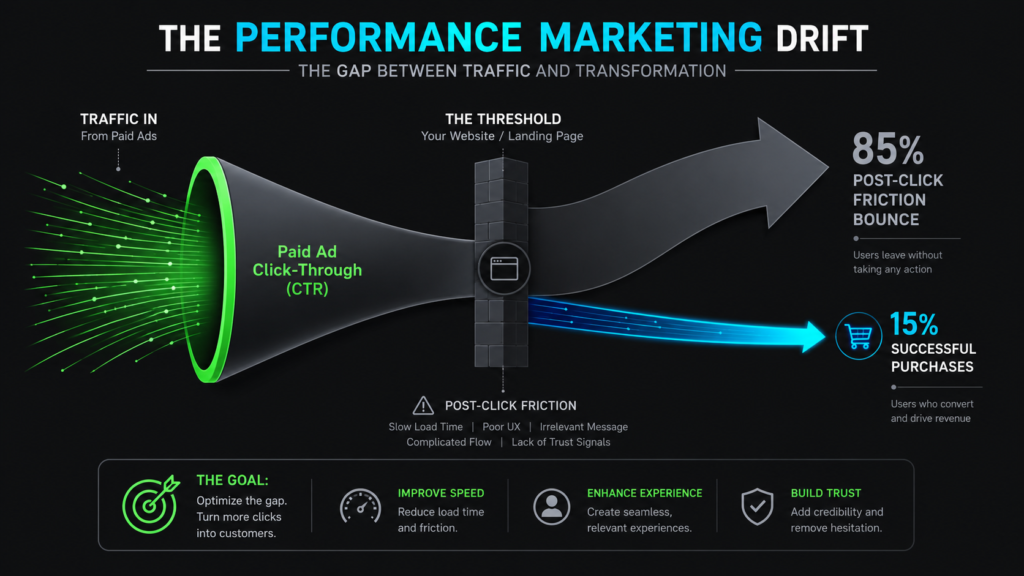
When you track platform metrics in isolation, a high click-through rate can easily disguise an underlying profitability leak. If your ad asset promises a specific outcome or showcases an elite visual hook, the landing page must instantly honor that exact expectation. When the user arrives and encounters an entirely different brand tone, confusing navigation options, or a generic product page, they bounce immediately.
This post-click drop-off means your target audience is rejecting your landing page frameworks, not your product or your paid media distribution. To build an ad account capable of scaling past major spend thresholds, your primary focus must shift from media buying tricks to structural conversion rate optimization. Your landing page is the core engine that turns paid attention into actual business revenue.
Framework 1: The 5-Second Above-the-Fold Test
The above the fold area is the most critical real estate on your entire website. When a mobile or desktop user clicks your link, your page has less than 5 seconds to pass three fundamental cognitive tests. The visitor must instantly process what your business offers, how it solves their specific pain point, and what action they need to take next.
If the user has to scroll down even a single pixel to understand your core proposition, your design hierarchy has failed. A highly optimized above the fold architecture requires a clean, punchy headline, a brief supporting subheadline, and a highly visible primary call-to-action button. Do not crowd this initial viewport with massive paragraphs, background video loops, or multiple distracting links.
To audit your current layout, run a simple 5-second test with completely unbiased users. Show them the mobile viewport of your landing page for exactly 5 seconds, hide the screen, and ask them what the page was about. If their answer is vague or incorrect, your visual architecture is actively costing you conversions every single day.
Framework 2: The Single Promise Hook
A high-converting landing page must have one specific job and guide the user toward one clear conversion goal. When you drive cold traffic to a page packed with general brand menus, social media links, and multiple unrelated product offers, you introduce severe choice anxiety. This fragmentation of focus dilutes user intent and drives up your abandonment rates.
To maximize execution efficiency, apply a strict rule of message matching across your entire funnel. The core promise, primary benefit, and visual style used in your top-performing ad copy must match the main headline of your landing page perfectly. This structural alignment reassures the visitor that they have arrived at the exact destination they intended to visit.
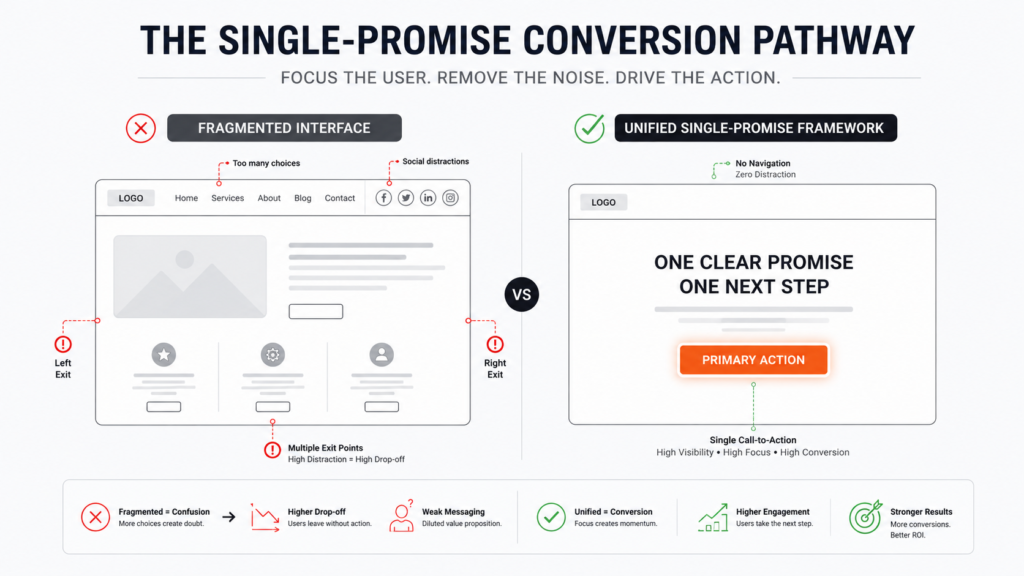
Removing your standard website navigation header from your dedicated landing page frameworks is an immediate way to test this approach. By eliminating secondary exit paths like “About Us” links, blog archives, or category filters, you keep the user completely focused on the primary funnel objective. Give the visitor a simple choice: convert now or close the browser tab entirely.
Framework 3: Social Proof Placement Map (where trust signals actually convert)
Almost every modern website displays some form of social proof, but very few brands place these trust signals strategically. Throwing a disorganized block of generic customer reviews at the very bottom of a long page provides almost zero conversion lift. To change user behavior, your social proof must actively counter specific customer doubts right at the moment they occur.
Instead of displaying vague praise, your trust assets should focus on specific, quantifiable outcomes. If you are scaling an elite D2C fashion or jewellery operation, your social proof should highlight texture authenticity, verified delivery speeds, and structural durability. If you are running a high-consideration B2B pipeline, your testimonials must showcase clear financial returns, implementation timelines, and baseline workflow improvements.
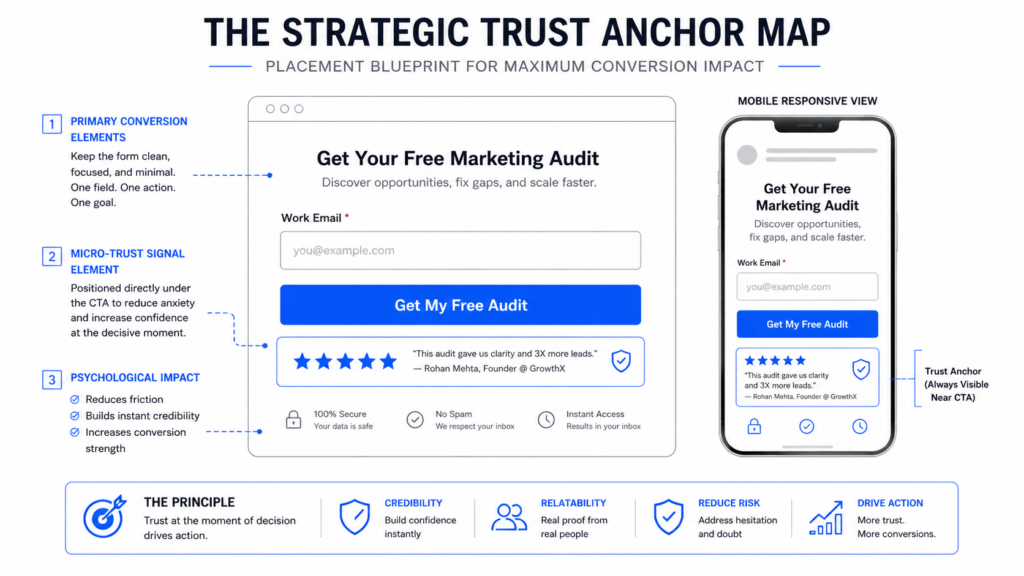
The physical placement of these signals is critical for maximizing micro-conversions. Position a verified rating snippet directly beneath your main headline to build immediate credibility above the fold. Next, place a highly specific, outcome-driven testimonial right next to your primary call-to-action button or form block. This micro-trust placement acts as a powerful conversion anchor precisely when the user experiences the highest transactional friction.
Framework 4: The Friction Audit (every field, click and second costs you)
Friction is the silent killer of online profitability. Every additional form field you require, every unnecessary click you force a user to make, and every confusing layout shift increases abandonment. When auditing lead generation or e-commerce accounts, I routinely discover that stripping away non-essential conversion steps yields far greater returns than buying more traffic.
Start your friction audit by analyzing your data input forms down to the individual field level. Ask yourself if you truly need a user’s company size, phone number, and job title during their very first micro-conversion step. In most B2B scenarios, requiring a phone number on an initial consultation request causes an immediate, sharp drop in completion rates.
Multi-device compatibility is another major source of user friction. A form layout that looks perfectly organized on a wide desktop screen can easily become distorted, clunky, and difficult to type in on a standard mobile device. Test your inputs using actual mobile hardware to verify that field labels remain clear, touch targets are large enough, and keyboard types switch automatically for number fields.
Framework 5: Page Speed = Money (the Core Web Vitals to revenue math)
You can build the most visually stunning, persuasive landing page framework in your industry, but if your site loads slowly, none of it matters. In high-budget performance marketing environments, page speed has a direct, measurable impact on your bottom line. When mobile latency rises, your acquisition cost spikes because visitors abandon the page before your tracking pixel can even register their visit.
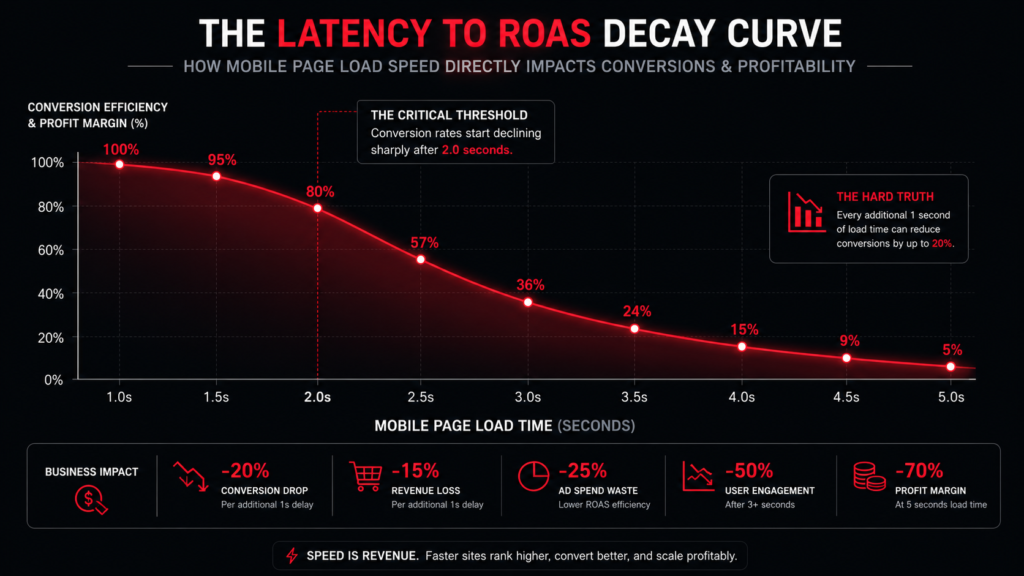
To optimize your technical performance, focus heavily on the Largest Contentful Paint (LCP) metric inside Google Core Web Vitals. Your primary hero image must be compressed, served in a modern WebP format, and delivered via a global Content Delivery Network (CDN). Avoid heavy client-side JavaScript frameworks or bloated font configurations that block your initial page rendering pipelines.
Eliminate layout shifts completely by assigning explicit width and height attributes to your visual containers. When your text elements or buttons jump around while loading, it creates severe cognitive irritation for mobile users. A lightning-fast, predictable load experience builds immediate, subtle brand trust and clears the path for seamless conversions.
How D2C and B2B Landing Pages Differ
While the core psychological principles of clarity and focus remain identical, you must modify your landing page frameworks based on your target audience’s purchasing behavior. A consumer buying an item on impulse requires an entirely different layout than an enterprise buyer committing to an expensive long-term contract.
For D2C operations, your framework should optimize for immediate emotional engagement, visual product presentation, and minimal checkout friction. Use high-resolution hero imagery, clear pricing structures, and risk-reduction elements like explicit money-back guarantees. The entire user journey should guide the prospect toward an immediate checkout event within a single session.
For complex business pipelines, your architecture must change to support longer sales cycles and multiple stakeholders. B2B buyers rarely convert on an initial visit, meaning your page must focus on capturing high-quality leads through authoritative resources. To learn how to move these corporate accounts from initial discovery to validated sales opportunities, pair this page structure with a nurture sequence and a sales follow-up window measured in hours, not days. If you sell into the US, UK, Australia or the EU, talk to me about the LinkedIn side of that pipeline.
A Simple CRO Testing Cadence You Can Run Weekly
Conversion rate optimization is an ongoing process of iterative testing, not a one-time structural fix. To build a highly resilient online platform, you must establish a continuous testing cadence that fits seamlessly into your weekly marketing operations. Do not attempt to test multiple major changes simultaneously, as this makes it impossible to isolate what actually moved the needle.
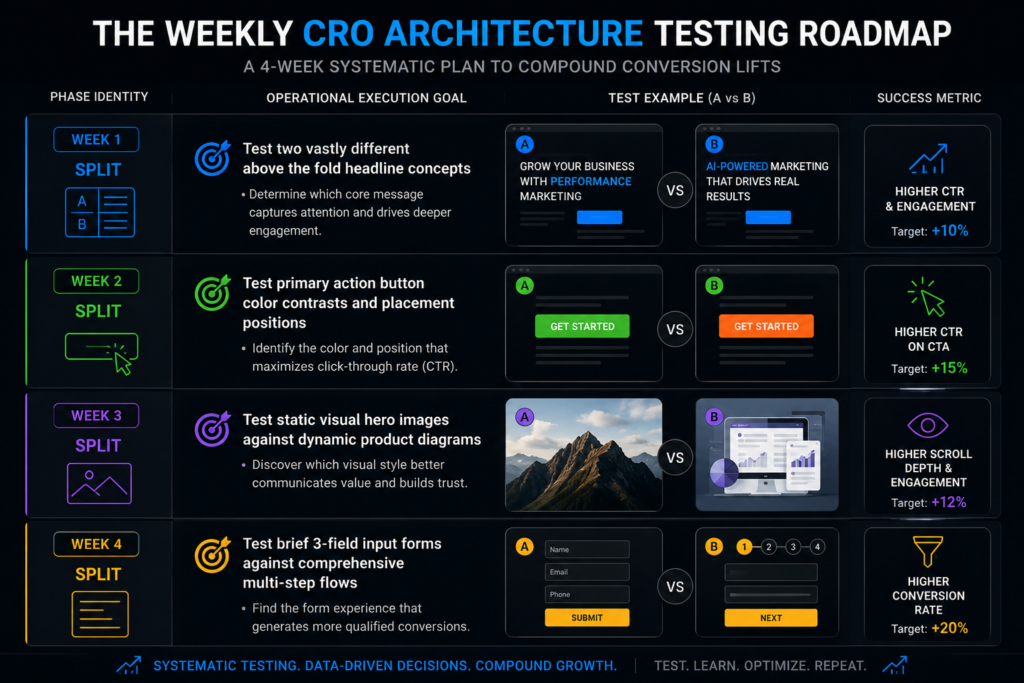
Begin by using tools like Hotjar or Microsoft Clarity to monitor real user sessions weekly. Watch where visitors scroll, notice where their mouse movements pause, and identify the exact layout areas where they abandon your forms. Use this behavioral data to form a clear testing hypothesis, run a clean A/B split test, and let the data guide your long-term design choices.
If you want to review your ongoing paid traffic performance or need a comprehensive, data-driven audit of your current conversion setup, send me your landing page and ad account details. Consistently optimizing your landing page mechanics is the most effective way to lower your customer acquisition costs and build a highly profitable scaling engine.
Landing Page Frameworks FAQ
What is a good conversion rate for a D2C jewellery or fashion landing page?
A standard conversion rate for competitive D2C fashion and jewellery landing pages generally ranges between 1.8 percent and 3.2 percent. If your current page performance drops below the 1.5 percent mark, it usually indicates a deep mismatch between your ad creative promise and your above the fold layout clarity.
Does page speed really affect conversion rate, and by how much?
Page speed has a massive, measurable impact on overall conversion efficiency across both D2C and B2B environments. Industry data confirms that web layouts that load in under 2 seconds convert at double the rate of pages that take longer than 4.5 seconds to render on mobile devices.
Where should social proof be placed on a landing page?
To maximize impact, you should position your social proof trust assets contextually across multiple key interaction points. Always place a verified star-rating summary directly beneath your main hero headline, and anchor specific, outcome-focused testimonials immediately adjacent to your primary conversion forms or action buttons.
Should a landing page have a navigation menu?
Dedicated conversion landing pages should completely remove standard website navigation menus and secondary footer archives. Eliminating these unnecessary exit links minimizes user distractions and keeps your target traffic entirely focused on your primary conversion goal.
How many form fields are too many for a B2B lead page?
For initial top of funnel lead generation, asking for more than 3 to 4 essential form fields will typically lower your conversion volume. Focus your initial capture forms on collecting core identifiers like first name, corporate email address, and company website URL, then gather deeper qualifying attributes further down the line.
What is the single highest-impact element on a landing page?
The single highest-impact element on any landing page is your primary above the fold headline hook. Your main headline determines whether a user stays to explore your offer or bounces immediately, making it the most critical variable to test during your optimization process.
About the Author
Akshay Singh Hada is a digital performance marketing manager based in Jaipur, Rajasthan, with 7+ years in paid acquisition and ₹1 CR+ in tracked ad spend across Meta Ads and Google Ads for D2C brands and international B2B. Connect on LinkedIn or request an account audit.
Next read: once the page converts, the bottleneck moves upstream to traffic quality. The Meta Ads scaling guide covers the campaign structure that feeds these pages. For the speed side, Google’s own Core Web Vitals documentation explains LCP, INP and CLS thresholds.
Pingback: AI Ad Creative Framework 2026: Generate High-Converting Visuals with AI
Pingback: Best Performance Marketing Manager in Jaipur (2026 Growth Playbook)